
On Inhabiting Authority
Writing, grief, and what it costs to speak in the age of AI

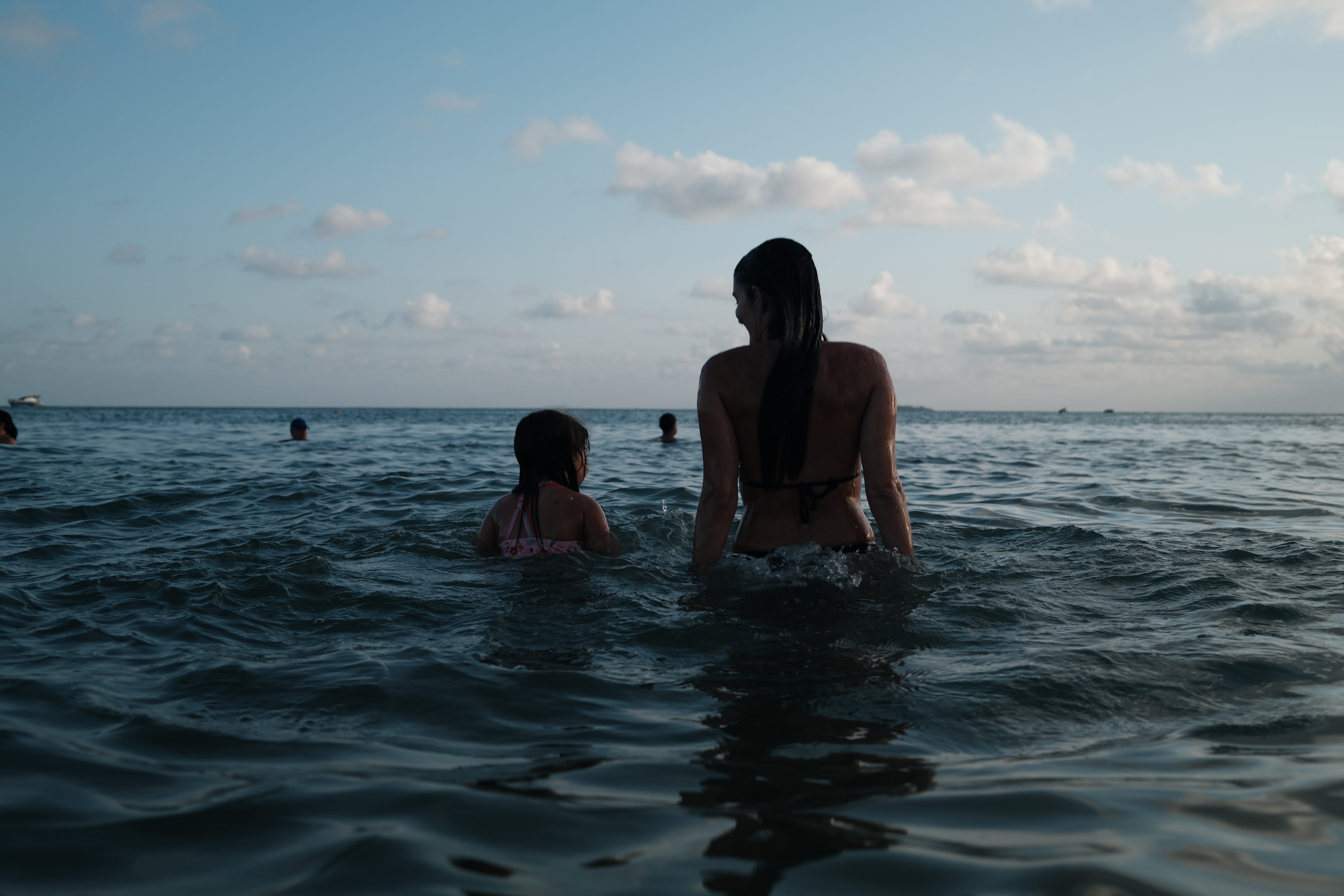
I used to call myself a writer.
In the first week of 2026 I’m reflecting on identity, authority, and language. Why do I assume authorship over an idea, and what does it mean to claim that with integrity?
This reflection feels less about claiming authority, and more about questioning how I inhabit it.
In the arc of my professional life, and in a former version of myself, I used to be very vocal. It was only two to three years ago that I was giving six talks a year, appearing on one to two podcasts per month, and publishing a reel twice per week on my Instagram that was professionally filmed and edited. I was told that in order to be noticed I needed to make my voice heard as much and as consistently as possible. Yet I also struggled with this because I didn’t always have something novel or meaningfully disruptive to say. And I didn’t want to contribute to an ever increasingly crowded environment of content that was already saturated with opinion and noise.
I was burning out by fueling the wheel of social media, and I felt like if I didn’t post at least three times per week I would fall behind. And so gradually I stopped contributing in that format. And while I didn’t get to the six-figure follower count it takes to be considered an influencer, I didn’t care. I soon found that I was trusting the people with more visibility less in what they had to say, because visibility seemed increasingly disconnected from depth or lived experience. It didn’t bring me more wildly successful opportunities, it only brought me more despair that I wasn’t contributing enough.
Visibility and the illusion of authority
It seems that people develop a false sense of authority when they post more and have more people following their work. It creates the illusion that frequency and visibility equal wisdom or merit. Some of the most influential voices today offer content that feels deeply misaligned, even toxic, and yet they are rewarded by the system.
I don’t want to trade my less-than-influencer status for that kind of hollow visibility, ever.
There are writers I deeply respect who don’t plan content for months nor release their essays in perfectly timed sequences. They respond to the present moment. They write off the cuff. You can feel it in their writing. Their work feels alive, because it is in relationship with what is happening now.
Language, being, and what gets lost
As a society we reward critical thinking and cognitive mastery and we lessen the value of “critical being,” embodying an experience without putting language to it.
When we put language around experience, we lose some of the nuance of being.
This feels all the more true now as I write this in Brazil spending some months with my family. In my family, meaning is exchanged more through the felt sense. Words matter, but they matter less than physical proximity, shared presence, and experiencing life moments together.
This past year I found myself writing less. I had transitioned careers and was focused on that, and, importantly, in my off time I was out experiencing life a little bit more. I feel I’m less in control and I’m loving it. Writing for me has been a form of containment. I thought, if I could control the story I tell the outside world, then maybe that means I’m in control of my inner world. But I’ve realized that’s not how meaning-making works.
As a writer it’s a gift and a curse to give meaning and clarity to what is embodied. My teachers in the Brazilian Amazon have told me that when we give an experience a name, we sometimes lose the medicine it carried.
We don’t talk explicitly about what happens to us because we lose the spirit that came through to us in the words themselves. Instead we describe the feeling so we can retain and remember the effect that the experience had on us.
We don’t name it in order to proclaim something new or claim we know any more than anyone else. We feel, which is the most human thing we can do. We let it soak and rise in our bodies, without rushing to translate it.
One of my intentions is to embody more of my life and not try to describe my experiences to others unless I have something to say that will truly land. That will inspire you to awaken. We have so much already to consume.
What more can a writer like me do? What more can I share that hasn’t been shared?
Experience as authority
Perhaps it’s my own experience.
This is what we all have to offer, something that is unique to each of us.
I believe that experience is the highest form of applied wisdom.
Not frameworks or cognitive theories, and not simply synthesizing or repeating someone else’s ideas. We can do that in small doses to support our thinking and to anchor ideas in precedent, but we have to stop writing as if our worth depended on gaining 1,000 more LinkedIn followers a day in order to feel authorized to speak.
Our ideas are whole and worthy of being actualized whether or not we’re a thought leader or influencer.
This is what we stand to lose, especially so in the age of AI: the permission to create and ideate from lived experience.
The permission to write when it feels right, not because we’re bound by the algorithm. The permission to be worthy no matter who sees what you say and do. The permission to feel and experience, and not need to tell the world about it in words.
This tension with language is also why I co-created the Global Oracle of Words. It’s a small, living inquiry that explores how words function when they’re offered as lived commitments rather than concepts. What continues to move me about this work is how differently language behaves when it’s rooted in experience. It’s also my first attempt at bridging my spoken languages of Portuguese and English. In Portuguese, the word protagonismo reflects the choice to take authorship of one’s own life and to step into presence, responsibility, and action. When we bring our full selves, ie our dreams, skills, and contradictions into our work, we activate this deeper sense of protagonismo.
The right not to explain
I studied art history in school and earned my BA in the subject. Early on, I learned that it wasn’t about the artist explaining what the work meant to them. When an artist creates, they relinquish control over how the work is received in the public. How people feel or react is no longer their responsibility.
This understanding has followed me well beyond my University studies. Do all of our Instagram photos need a caption? Sometimes it’s the photo itself that tells enough of a story. Before social media the captions to art were secondary in any context. Artists didn’t have to explain themselves. In museums, paintings or photographs are often accompanied by only a few lines of context, if any at all.
It’s not about the words. It’s the image and how it makes you feel, the viewer. The artist’s context for a photo, drawing, or painting, and their interpretation of it, while relevant in certain art historical contexts, doesn’t really matter to the lived experience of the work itself.
We don’t need to over-explain or over-caption our art.
We only need to give permission to the viewer to trust their reaction, regardless of whether they’re an acclaimed art gallery curator or someone encountering the work for the first time, without context or credentials. Everyone has a right to have something to say. And they just may not say it through weekly Substack essays, daily Linkedin posts, or a steady stream of commentary.
The cult of efficiency and a writer’s grief
In my work I need to balance efficiency with integrity of output. AI is part of my day-to-day reality. It’s inescapable, and it also shouldn’t be avoided. As someone working directly in AI leadership and strategy, engaging with these tools is not optional; it’s part of my responsibility.
Even just two years ago when I was writing my talks, everything was done by hand. The TEDx talk I gave in Berlin in 2024 was written entirely by me, with support from a speaker coach brought in by the organizers. We spent weeks writing and reworking the text, shaping and reshaping each section.
Fast forward a very short couple years and I honestly don’t know, if I were writing my TEDx talk today, how much or how little I’d use AI to help me now. Would it be just for the transitions? Or would I be writing all of it?
I think of completing my MSc in Neuroscience back in 2019 and the hours I spent writing my dissertation. I remember the grind of writing the academic paper I co-authored and published in 2024. It took us 18 months, with hundreds of hours of writing and revision, peer review feedback responses and journal application letters.
Now how does it work? Are researchers drafting entire papers from scattered notes with the help of LLMs? Is citation still a human act, or something we now outsource entirely?
I grieve the writer in me that needed to sit down and piecemeal ideas in a cohesive and structured way without any outside assistance.
I grieve the days during the pandemic when I would wake up from a dream and write poetry in my notebook, spilling my creative fire nonstop for a year.
I grieve the writer who wrote without needing to appeal to an audience or calculate engagement, reach, or performance metrics.
How much value does my original writing have now in the age of AI?
Recently, I tested this question directly. I revisited a poem I wrote in 2020 called Dream Diver. I asked ChatGPT to evaluate the poem and reflect on how it might be revised to meet the standards of a major literary prize. The response made my heart sink.
The reasoning behind the suggested changes was thoughtful, and I recognize that I set a very high bar in invoking that kind of recognition. And yet, what came back wasn’t my poem at all. Whatever it gained in polish, it lost in truth. Does one need to write a poem anymore? I humbly accept my shortcomings as an amateur poet, though I still question my own authority and the value of producing work through the written word.
Choosing presence anyway
I have a dream of writing a book. I’ve held this desire for years. At first I thought it would grow out of the talks I was giving or the ideas I was shaping publicly. Now I’m less sure. I don’t know what form it would take, or whether it would even look like a book at all. What will I contribute, and is there room for what I want to convey? I’m a writer as much as I am in the ongoing process of integrating my whole being into my life, into what I’m living and experiencing, not just what I can articulate. I only know that whatever wants to be written can’t be rushed, optimized, or produced on demand. It needs to come slowly, imperfectly, and without guarantees.
It’s funny to me that I have so many snippets of writing in my notes app on my phone and I always say I’ll get back to them later when I have time to perfect them before I publish on Substack. A familiar pattern of insecurity disguised as discernment.
And here I am, writing most of this in my notes app on the road, editing the next day and finally publishing within 24 hours of the inception of the idea. This is a habit I want to explore and commit to more this year. With AI it’s so easy to have perfectly trimmed and curated content. Instead, I’m choosing to accept that my writing won’t be perfect, and that it doesn’t need to be. It only needs to be honest to what is present.
Perhaps that’s the throughline I’m following. And with that, when I’m not writing, my only antidote to my daily cognitive load is being fully present in the offline.
It may cost me visibility or clarity, but it feels like the only honest place to stand right now.
How do you balance your need to create with the demands of output that are so heavily biased on language? What if there were no words to explain your world right now?
What would still be true, even without explanation?
I wish there was a button to privately highlight your text ✨ thank you so much for this, what a wonderful reading! Very true, very honest, very wise. I am very happy I bumped into this 🤍
Thank you for this beautiful, integral reflection, Amanda.
It feels like a quiet but powerful reclamation of authority rooted in lived experience rather than performance or output. In a time saturated with visibility, metrics, and acceleration, your writing is a reminder that integrity, presence, and embodied truth are not prerequisites for expression - they are the source of it.
It is indeed troubling that our lived experience has become entangled with algorithmic output, creating insecurity because it is so deeply linked to our economy and to how we make a living.
Once we move beyond that threshold - and are able to create abundant lives that are less dependent on producing ideas, writing, or creativity for the economic system - we can reclaim an even deeper sense of autonomy and freedom.
Some of the work we do with Voices of Emergence may also appear bound by numbers, but our intention is to focus on quality rather than quantity. Just as in life and in relationships, meaning doesn’t live in how much we produce, but in the depth of what is lived.
In the end, it’s not the quantity we’ll remember, but the quality of our relationships and experiences.
Grateful for your authentic expression and for voicing this so clearly.